

What This Week's Heatwave Reminded Me About One of the Most Important Skills Our Children Can Learn
Jun 28, 2026Contents
- Introduction
- The Heatwave Was Just the Beginning
- I Couldn't Change the Weather, So I Changed My Routine
- Why We Spend Too Much Energy Worrying About Things We Can't Control
- Why Maths Teaches Much More Than Maths
- One University Exam Taught Me This Lesson Years Ago
- The Same Lesson Applies Everywhere
- Helping Children Become Adaptable
- Five Practical Ways Parents Can Encourage Adaptability
- The Lesson I'll Remember Long After the Heatwave
- A Challenge for This Week
- About the Author
- Continue the Conversation
Introduction
This week has been one of the hottest I can remember.
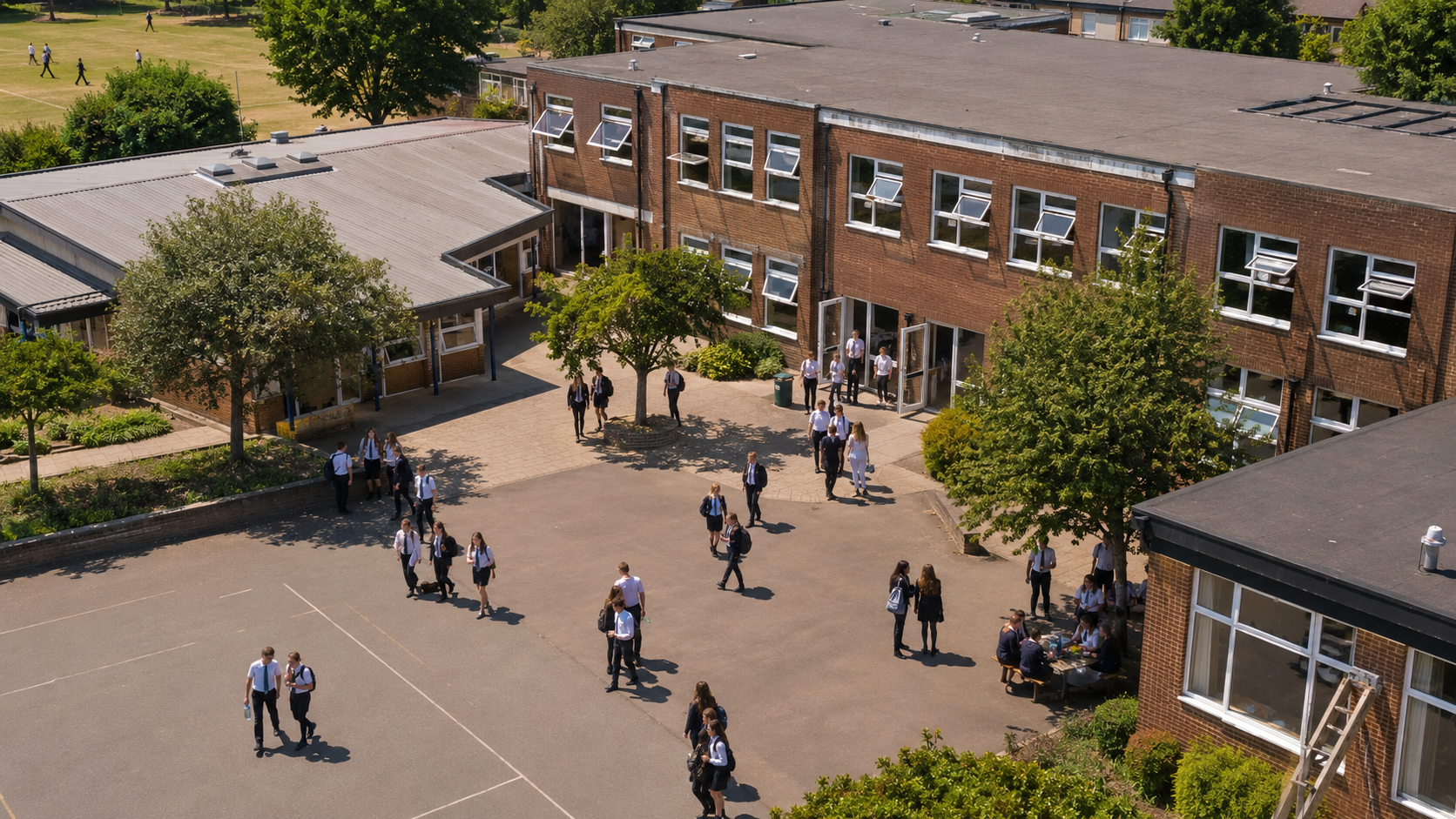
Temperatures reached the mid-thirties in parts of the UK, many schools shortened the school day or closed altogether, classrooms became uncomfortable and, judging by the conversations I've had, most people simply found it harder to concentrate.
If you're a parent, you've probably noticed it yourself.
Children have been more tired than usual.
Homework has taken longer.
Even simple tasks have felt that little bit more difficult.
To be honest, I felt exactly the same.
Over the past few weeks I've been marking GCSE Maths exam papers, and this week's heat made me completely rethink how I approached my working day.
What struck me wasn't really the weather itself.
It was what the weather reminded me about learning, education and life.
Because the more I thought about it, the more I realised that one of the most valuable skills we can teach our children isn't a GCSE subject at all.
It's adaptability.
In a world that is changing faster than ever before, I believe adaptability may become one of the most important skills our children ever develop.
The Heatwave Was Just the Beginning
When something unusual happens, it's very easy to focus on the event itself.
This week everyone was talking about the temperature.
Will schools close?
Should children wear ties?
Is it too hot to learn?
They're perfectly reasonable questions.
But they're also temporary ones.
In a few days' time, the weather will cool down and life will return to normal.
The lesson, however, is much bigger than the heatwave.
Throughout life, there will always be things we can't control.
The weather.
Traffic.
Technology changing.
Unexpected setbacks.
A difficult exam paper.
A disappointing interview.
A change of plans.
None of us gets to choose those.
What we do get to choose is how we respond.
And I've found that the people who are happiest, most successful and most resilient are rarely those who have the easiest journey.
They're usually the people who become very good at adapting when things don't go to plan.
I Couldn't Change the Weather, So I Changed My Routine
Over the past few weeks I've been marking GCSE Maths exam papers.
Like every examiner, I work to a fixed deadline.
The papers have to be marked on time.
The weather doesn't change that deadline.
So when temperatures began climbing this week, I had a decision to make.
I could accept that I was simply going to get less done because it was too hot.
Or I could change something else.
I chose to change my routine.
Instead of working mainly during the day, I started getting up at 5am.
Between five and seven in the morning, everything is different.
The house is quiet.
The air is cooler.
There are fewer distractions.
Most importantly, my concentration is far better.
Those two hours have probably been worth four or five hours later in the afternoon.
Not because I suddenly became smarter at five o'clock in the morning.
Simply because I'd changed my environment.
I hadn't solved the problem.
I couldn't.
The weather was still hot.
Instead, I'd adapted to it.
That idea stayed with me throughout the week because it reminded me of something I see in education all the time.

We Often Spend Too Much Energy Worrying About Things We Can't Control
Students do this constantly.
Every year I hear questions like:
"What if the grade boundaries are really high?"
"What if this topic comes up?"
"What if everyone else found the paper easier than I did?"
"What if the exam room is really hot?"
They're understandable questions.
But none of them help.
Take grade boundaries as an example.
Students ask me about them every single year.
The truth is that nobody knows what they will be until the papers have been marked.
That's because grade boundaries depend on how students across the country perform.
If the paper turns out to be more difficult than expected, the grade boundaries often reflect that.
If students generally perform very well, they may rise.
In other words, worrying about them beforehand changes absolutely nothing.
It's time and emotional energy that could have been spent somewhere much more useful.
The same applies during an exam.
Students cannot control which questions appear.
They cannot control whether the paper is easier or harder than previous years.
They cannot control whether the person sitting next to them finishes early.
They cannot control the temperature in the room.
What they can control is how well prepared they are.
They can control whether they got enough sleep.
Whether they organised their revision.
Whether they read the question carefully.
Whether they showed all of their working.
Whether they stayed calm when they met a question they didn't immediately recognise.
When I think back over the thousands of students I've taught during the last twenty years, the ones who improved the most weren't necessarily the cleverest.
They were usually the students who spent less time worrying about the things outside their control and more time improving the things that were within it.
That's a lesson that extends far beyond education.
Why Maths Teaches Much More Than Maths
One of the questions I've been asked countless times over the years is:
"When am I ever going to use Pythagoras?"
It's a fair question.
The honest answer is that most people won't regularly use Pythagoras' Theorem once they leave school.
The same is true for many topics in GCSE Maths.
But I also think it's the wrong question.
The value of studying maths has never really been about memorising one particular formula.
It's about learning how to learn.
Think about what happens when a student starts a completely new topic.
Perhaps it's trigonometry.
Perhaps it's algebra.
Perhaps it's vectors.
On the first day, they've probably never seen anything like it before.
Over the following days and weeks, they begin to understand the language, recognise the patterns, practise the techniques, make mistakes, correct those mistakes and gradually become more confident.
That process is far more important than the topic itself.
What they're really learning is how to take an unfamiliar idea and turn it into something they understand.
That's exactly what adults have to keep doing throughout their lives.
The world doesn't stand still.
Technology changes.
Jobs change.
Entire industries evolve.
The people who thrive are rarely the ones who already know everything.
They're the ones who can keep learning.
In many ways, that's why I still believe maths is one of the most valuable subjects children study.
It isn't because every student will one day need simultaneous equations or trigonometry.
It's because every student will spend the rest of their life being asked to learn new things.
And the better they become at learning, adapting and solving problems, the more opportunities they'll create for themselves.
In fact, I think this is becoming even more important with the rapid growth of artificial intelligence.
AI can already answer many questions.
It can explain concepts.
It can write computer code.
It can solve mathematical problems.
But it still can't replace the person who is curious enough to ask better questions, thoughtful enough to challenge the answers, or adaptable enough to keep learning as the world changes around them.
Those are human skills.
And they're exactly the skills education should continue to develop.

One University Exam Taught Me This Lesson Years Ago
When I was studying for my maths degree, I remember sitting one particular exam that has stayed with me ever since.
One of the questions asked us to complete a long mathematical proof.
It was worth a significant number of marks and stretched over almost four pages of working.
There was just one problem.
I couldn't remember the very first line.
Ironically, I knew almost everything that came after it.
If I could just remember how the proof started, I knew exactly how to complete the remaining pages.
For a few moments I had a choice.
I could leave the question blank because I'd forgotten the opening step.
Or I could adapt.
I chose the second option.
I wrote on the paper that I couldn't remember the first line of the proof, explained what I believed needed to happen next, and then continued the proof exactly as I would have if I had remembered the opening step.
I didn't receive full marks.
Nor should I have.
But I received most of the marks because I'd demonstrated my understanding of everything that followed.
Looking back, that exam taught me something far more valuable than the mathematics itself.
When something doesn't go to plan, don't stop.
Adapt.
That lesson has stayed with me ever since.
The Same Lesson Applies Everywhere
The more I think about it, the more I realise this isn't really an education lesson.
It's a life lesson.
As adults, we face exactly the same situations.
Sometimes technology changes.
Sometimes the economy changes.
Sometimes our plans change overnight.
Sometimes something we've always relied upon suddenly no longer works.
The people who continue to grow aren't necessarily the most talented.
They're often the people who adapt the quickest.
I've seen this myself recently with artificial intelligence.
About six months ago, I tried building a gym workout tracking app.
I have a Computer Science background, so I thought it would be an interesting project.
I made some progress, but after a couple of weeks I gave up.
It was taking too long.
About a month ago, I decided to try again.
This time, I approached the problem completely differently.
Instead of trying to build everything myself, I used Claude to help me.
I didn't simply type:
"Build me a gym workout app."
Instead, I carefully explained exactly what I wanted.
My initial prompt was around 1,500 words long.
Claude then asked me questions.
I answered them.
We refined the idea together, going backwards and forwards around thirty or forty times.
Three hours later, I had a working app.
I've been using it ever since.
What amazed me wasn't just the technology.
It was how quickly the world had changed.
Only a few years ago, building something similar might have required months of work and tens of thousands of pounds.
Now it was possible in a single afternoon.
That experience reinforced something I've been thinking about for a while.
The future won't belong to the people who resist change.
It will belong to the people who learn how to adapt to it.

Helping Children Become Adaptable
As parents, we naturally want to make life easier for our children.
If they're struggling with homework, we help.
If they're upset, we comfort them.
If something goes wrong, we want to fix it.
There's absolutely nothing wrong with that.
But I also think it's worth asking ourselves another question.
Are we giving our children enough opportunities to solve problems for themselves?
Because that's where adaptability develops.
Children don't become adaptable by reading about resilience.
They become adaptable by experiencing small setbacks, thinking their way through them, and discovering that they can overcome them.
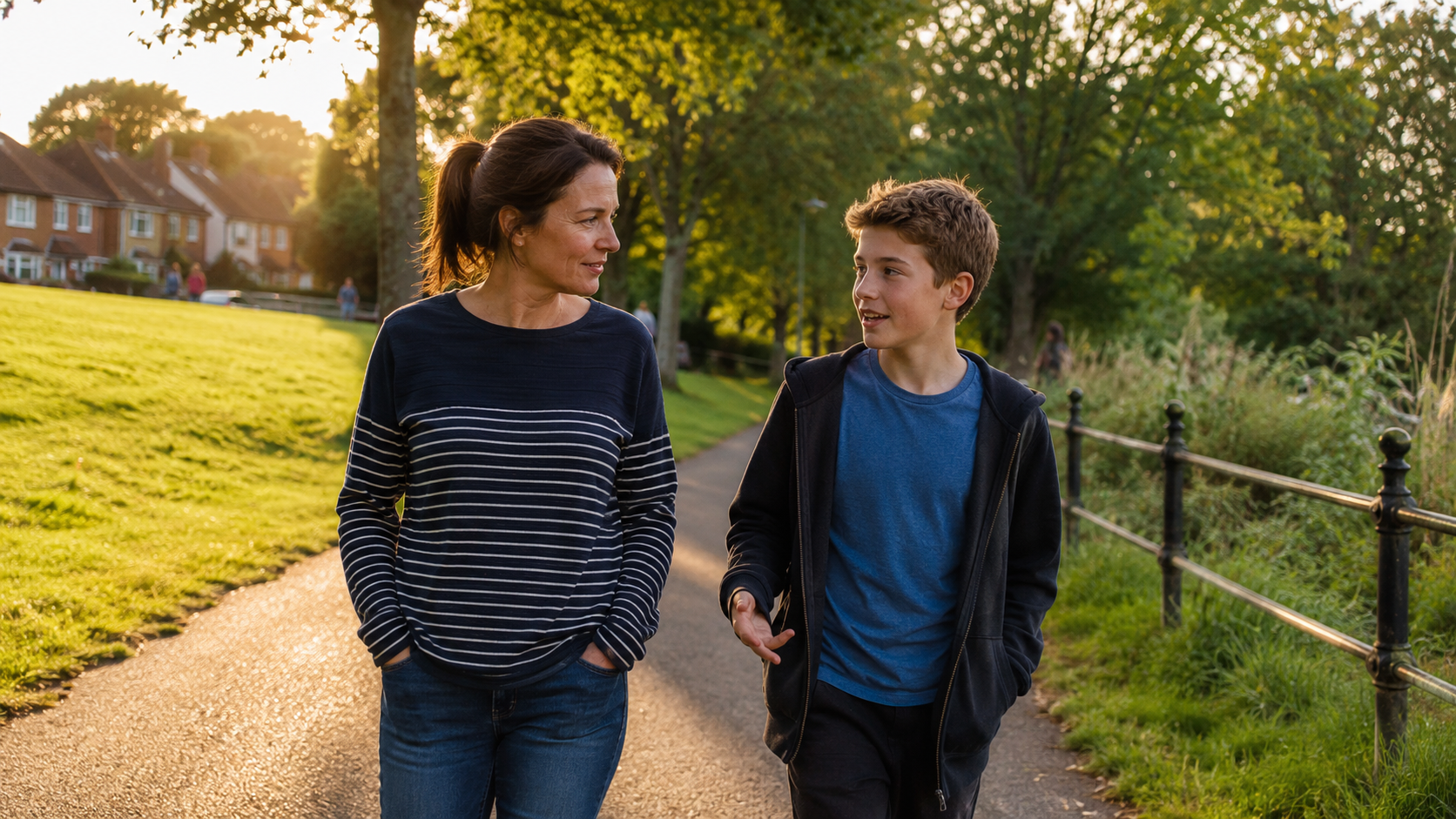
Sometimes that might mean figuring out a different way to revise.
Sometimes it means learning from a disappointing test result.
Sometimes it means adjusting when circumstances aren't perfect.
Those experiences build confidence.
Not because everything went smoothly.
But because they learned they could cope when it didn't.
Five Practical Ways Parents Can Encourage Adaptability
One of the reasons I wanted to write this article is because adaptability isn't something we're born with.
It's something we practise.
Here are five simple ways parents can help.
1. Encourage solutions before providing answers
When your child comes to you with a problem, resist the temptation to solve it immediately.
Instead, ask:
"What do you think you could try?"
Often they know more than they realise.
2. Praise the way they responded, not just the result
If something goes wrong but they stay calm, try another approach or keep going, praise that.
Those behaviours matter far more than whether every answer was correct first time.
3. Let them experience manageable challenges
Not every obstacle needs removing.
Sometimes struggling with something for a while is exactly how confidence grows.
4. Help them focus on what they can control
Whether it's exams, sport or friendships, encourage them to separate the things they can influence from the things they can't.
It's a habit that will reduce anxiety throughout their lives.
5. Be a role model
Children notice far more than we think.
When plans change unexpectedly, let them see how you adapt.
The way we respond to setbacks often teaches them far more than anything we deliberately try to explain.
The Lesson I'll Remember Long After the Heatwave
In a week's time, this heatwave will probably be forgotten.
The temperatures will return to normal.
Schools will reopen fully.
Life will move on.
But I hope the lesson stays.
We spend a surprising amount of our lives wishing circumstances were different.
We wish the weather were cooler.
We wish exams were easier.
We wish we had more time.
We wish life were a little more straightforward.
Sometimes those wishes come true.
Often they don't.
The people I've admired most throughout my life haven't been the ones who waited for ideal conditions.
They've been the ones who quietly adjusted, found another way and kept moving forwards.

I think that's one of the greatest gifts we can give our children.
Not the belief that life will always be easy.
But the confidence that, whatever life throws at them, they can adapt.
A Challenge For This Week
Over the next few days, I'd encourage you to try something with your child.
When something doesn't go to plan, instead of asking:
"Why has this happened?"
Ask:
"What can we change?"
It might be changing the time they revise.
It might be changing where they work.
It might be changing the way they approach a problem.
Or it might simply be changing their mindset.
That one small question encourages children to move from frustration towards problem solving.
And in my experience, that's a habit that will serve them well for the rest of their lives.
About the Author
Anish Patel has over 20 years' experience teaching GCSE and A Level Maths and has been a GCSE Maths examiner since 2005.
He is the founder of Mathinar, where he helps students build confidence, develop strong mathematical thinking and achieve their target grades through live online lessons, examiner insight and practical revision strategies.
Continue the Conversation
I'd love to hear your thoughts.
Has your child ever surprised you by adapting brilliantly when something didn't go to plan?
Or perhaps you've seen an example in your own life where changing your approach made all the difference.
Feel free to reply to my newsletter or get in touch through the website. I always enjoy hearing your stories.
